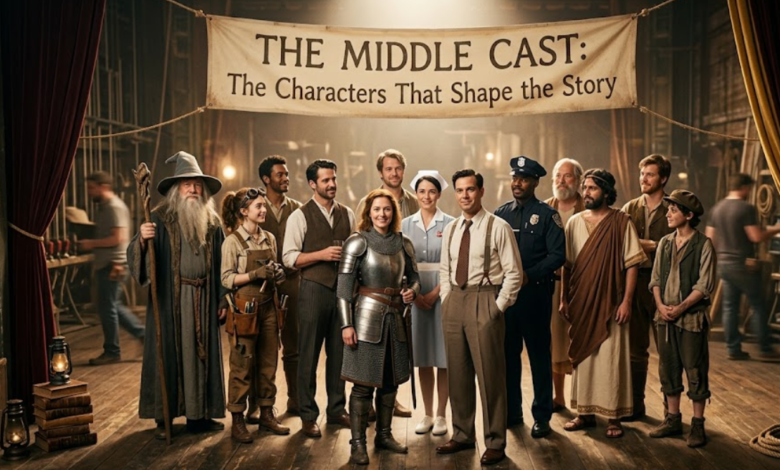
In storytelling, every character plays a role in shaping the narrative. While main protagonists and antagonists often receive the most attention, there is another important group of characters that significantly contributes to the depth and realism of a story—the middle cast. These characters are neither the primary heroes nor the minor background figures. Instead, they exist somewhere in between, providing support, conflict, development, and emotional balance within the plot.
The middle cast is crucial because they help drive the story forward, develop the main characters, and add complexity to the narrative. Without them, stories would often feel flat, predictable, and less engaging. Understanding the role of the middle cast allows writers and readers alike to appreciate how layered storytelling truly works.
What Is the Middle Cast?
The middle cast refers to characters who play significant supporting roles in a story but are not the central focus. They typically appear frequently throughout the narrative and have their own personalities, motivations, and relationships with the main characters.
Unlike minor characters who might appear briefly, middle cast members usually participate in multiple scenes and often influence the direction of the story. They may assist the protagonist, challenge them, provide guidance, or represent different perspectives within the narrative.
These characters help create a more believable world because they add social structure, emotional connections, and situational dynamics that make the story feel realistic.
The Role of the Middle Cast in Storytelling
The middle cast serves several essential roles within storytelling. Their presence enhances the narrative in many ways and strengthens the overall structure of the story.
First, they support the development of the protagonist. Through conversations, conflicts, and relationships, the middle cast helps reveal the main character’s personality, strengths, and weaknesses.
Second, they contribute to plot progression. Many turning points in stories happen because of the actions or decisions of middle cast characters.
Third, they provide emotional balance. Some middle cast members bring humor, others offer wisdom, while some create tension or conflict. These varying dynamics keep the story engaging and prevent it from becoming one-dimensional.
Finally, the middle cast helps build the world of the story. Through their backgrounds, occupations, and personal struggles, they expand the narrative universe beyond the protagonist’s individual journey.
Types of Middle Cast Characters
The middle cast can include a wide variety of character types, each contributing differently to the story. Some of the most common types include allies, mentors, rivals, and emotional anchors.
Allies and Companions
Allies are characters who assist the protagonist throughout the story. They may provide practical help, emotional support, or strategic advice. These characters often travel with the protagonist and experience key moments alongside them.
Allies help the audience understand the protagonist more deeply because their interactions reveal personal traits and relationships.
Mentors and Guides
Mentor characters are another important part of the middle cast. These individuals provide knowledge, training, or wisdom to the main character.
Mentors often help the protagonist grow, overcome challenges, and understand their purpose. Although they may not appear in every scene, their influence is usually strong and lasting.
Rivals and Competitors
Rivals create tension and motivation within the story. Unlike the main antagonist, rivals are not necessarily evil. Instead, they represent competition, contrasting viewpoints, or personal challenges for the protagonist.
Their presence pushes the protagonist to improve, rethink decisions, and confront personal limitations.
Emotional Anchors
Some middle cast characters serve as emotional anchors in the story. They may be family members, close friends, or romantic interests who provide stability and emotional grounding for the protagonist.
These characters help humanize the story and remind readers or viewers of what the protagonist is fighting for or trying to protect.
How the Middle Cast Shapes the Plot
The middle cast often influences the direction of the story in subtle yet powerful ways. Their decisions, mistakes, and personal goals frequently create new opportunities or obstacles for the protagonist.
For example, a supportive friend may encourage the protagonist to pursue a risky goal. A rival might trigger a competitive event that changes the story’s direction. A mentor may introduce knowledge that unlocks the solution to a major problem.
Because of these interactions, the middle cast often acts as a catalyst for important narrative developments.
Without these characters, many stories would struggle to maintain momentum or emotional depth.
The Importance of Character Depth in the Middle Cast
One of the key aspects of a strong middle cast is character depth. Well-developed supporting characters should have distinct personalities, motivations, and backstories.
When writers invest effort into building meaningful middle cast characters, the story becomes richer and more immersive. Readers begin to care about these characters and their outcomes, even if they are not the main focus.
A strong middle cast can even become fan favorites because they offer unique perspectives or memorable moments that resonate with audiences.
This depth helps transform a simple narrative into a layered and engaging experience.
Middle Cast in Different Types of Stories
The role of the middle cast can vary depending on the genre and style of the story.
In adventure stories, the middle cast often includes teammates, companions, or fellow travelers who share the journey with the protagonist.
In mystery narratives, the middle cast might include suspects, investigators, witnesses, or experts who contribute clues and information.
In drama or romance stories, the middle cast often represents friends, family members, and colleagues who influence relationships and emotional conflicts.
Regardless of the genre, the middle cast remains an essential component of storytelling.
How Writers Create Effective Middle Cast Characters
Creating compelling middle cast characters requires careful planning and creativity. Writers must ensure that these characters feel meaningful without overshadowing the main storyline.
One effective strategy is to give each middle cast character a clear purpose in the story. Every character should contribute something valuable to the narrative.
Another approach is to create distinct personalities and voices. When characters have unique behaviors, speech patterns, and viewpoints, they become easier for readers to remember.
Writers also benefit from giving middle cast characters personal goals or challenges. Even if these subplots are not the central focus, they add realism and emotional complexity to the story.
Balancing screen time or page presence is also important. The middle cast should support the story without overwhelming the protagonist’s journey.
The Middle Cast and Audience Engagement
A well-developed middle cast can greatly increase audience engagement. Readers and viewers often connect with different characters for different reasons.
Some audiences relate to the loyal friend who supports the hero, while others admire the rival who constantly challenges them. In many cases, middle cast characters become just as beloved as the main character.
These characters also create opportunities for humor, emotional moments, and unexpected twists that keep audiences invested in the story.
By expanding the narrative beyond the protagonist, the middle cast helps create a more immersive storytelling experience.
Common Mistakes When Writing the Middle Cast
While the middle cast is essential, writers sometimes make mistakes when developing these characters.
One common mistake is creating too many supporting characters without giving them clear roles. This can confuse readers and dilute the impact of the story.
Another mistake is making middle cast characters feel generic or interchangeable. If multiple characters serve the same purpose, they may become forgettable.
Writers also need to avoid neglecting these characters once the main plot intensifies. A strong story maintains the presence and relevance of the middle cast throughout the narrative.
Finally, it is important not to allow the middle cast to overshadow the main storyline unless the narrative intentionally shifts focus.
The Future of Middle Cast Characters in Modern Storytelling
Modern storytelling continues to evolve, especially with the growth of television series, streaming platforms, and long-form narratives. These formats often allow greater exploration of middle cast characters.
Many stories now feature ensemble casts where several characters share significant narrative importance. In such cases, the line between protagonist and middle cast becomes more flexible.
This trend reflects audience demand for complex characters and interconnected storylines. As storytelling evolves, the middle cast will likely continue playing a vital role in creating rich, engaging narratives.
Conclusion
The middle cast is one of the most important elements of storytelling. These characters bridge the gap between main protagonists and minor background figures, providing support, conflict, emotional depth, and narrative momentum.
By shaping the protagonist’s journey, influencing key plot developments, and expanding the world of the story, middle cast characters make narratives more dynamic and realistic.
Whether they act as loyal companions, wise mentors, fierce rivals, or emotional supporters, the middle cast enriches the storytelling experience and helps bring fictional worlds to life.
Understanding and appreciating the role of the middle cast allows both writers and audiences to recognize how essential these characters truly are.
FAQs About The Middle Cast
What does the middle cast mean in storytelling?
The middle cast refers to supporting characters who play meaningful roles in a story but are not the primary protagonists or main antagonists. They appear regularly and help develop the plot and main characters.
Why is the middle cast important in stories?
The middle cast adds depth, emotional complexity, and narrative momentum. These characters support the protagonist, create conflicts, and help build the world of the story.
Are middle cast characters the same as minor characters?
No, they are different. Minor characters usually appear briefly and have limited impact on the story. Middle cast characters appear more frequently and influence important events.
Can a middle cast character become a main character?
Yes. In many stories, a supporting character may gradually take on a larger role and become a central character as the narrative progresses.
How many middle cast characters should a story have?
There is no fixed number. The ideal amount depends on the complexity of the story, but each character should serve a clear purpose and contribute to the narrative.