
The Life Before Her Eyes: A Deep Exploration of Memory, Trauma and Alternate Realities

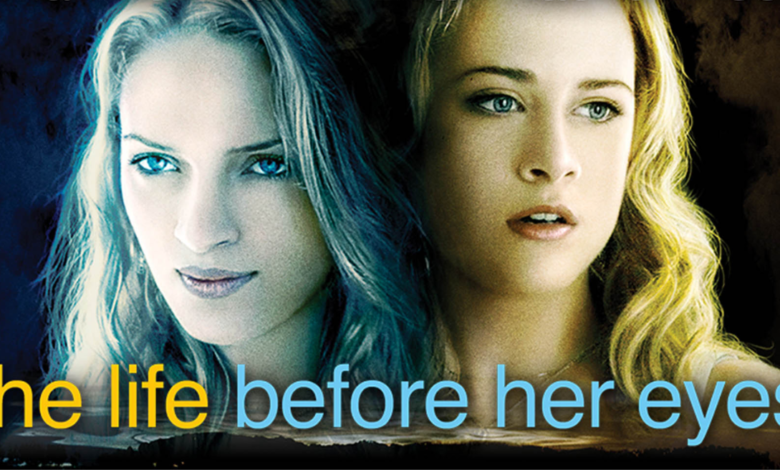
The Life Before Her Eyes is a haunting and emotionally layered story that explores how a single moment can fracture a life into multiple possible realities. Originally based on the novel by Laura Kasischke and later adapted into a psychological drama film, the narrative challenges the boundaries between memory, imagination, and survival. Whether experienced through the written word or on screen in The Life Before Her Eyes, the story leaves audiences questioning what is real and what is reconstructed by a mind shaped by trauma.
At its core, The Life Before Her Eyes is not just about an event—it is about the lingering psychological aftermath of violence, the fragility of identity, and the way people cope with unbearable guilt and loss. This article provides a detailed exploration of its themes, characters, symbolism, and emotional impact.
Overview of the Story
The narrative centers on Diana McFee, a woman who survives a tragic school shooting during her teenage years. Years later, she appears to live a seemingly normal adult life, but her reality is constantly influenced by fragmented memories of that traumatic day.
The story alternates between two timelines:
- Diana’s teenage years, where she experiences friendship, rebellion, and fear.
- Her adult life, where she struggles with emotional instability, guilt, and distorted memories.
As the plot unfolds, the audience realizes that not everything is as straightforward as it seems. The boundaries between what actually happened and what Diana believes happened begin to blur, creating a psychological puzzle that defines the entire narrative.
In both the novel and its cinematic adaptation, the story gradually reveals that memory is not a reliable recorder of truth but a deeply subjective experience shaped by emotional survival.
The Core Themes of The Life Before Her Eyes
Memory and Subjectivity
One of the most powerful themes in The Life Before Her Eyes is the unreliability of memory. Diana’s recollections are fragmented and often contradictory, suggesting that trauma can reshape how events are stored in the mind.
Rather than presenting a clear sequence of events, the story shows how memory can:
- Distort time
- Merge imagination with reality
- Suppress painful truths
- Create alternate versions of events as coping mechanisms
This theme invites the audience to question whether any memory can truly be trusted.
Trauma and Psychological Survival
The story also deeply examines psychological trauma. Diana’s mind does not simply “remember” the school shooting—it reprocesses it repeatedly in different emotional forms.
Trauma in the story is not just a past event but an ongoing presence that influences:
- Her emotional stability
- Her relationships
- Her perception of reality
- Her sense of identity
The narrative suggests that survival is not only physical but also psychological, and that the mind may create protective illusions to cope with unbearable guilt.
Identity and Duality
A central question in the story is: Who is Diana McFee really?
Throughout the narrative, she appears to exist in two conflicting identities:
- The teenage girl living through the shooting.
- The adult woman reflecting on her past.
However, as the story progresses, it becomes clear that these identities may not be separate at all. Instead, they represent fractured versions of a single consciousness trying to reconcile a traumatic memory.
This duality raises profound philosophical questions about selfhood:
- Are we defined by what happens to us or how we remember it?
- Can identity survive extreme psychological trauma intact?
The Novel by Laura Kasischke
The original novel, The Life Before Her Eyes, written by Laura Kasischke, presents the story in a lyrical and introspective style. The book emphasizes internal monologue, emotional depth, and symbolic imagery.
Kasischke’s writing focuses heavily on:
- The emotional instability of adolescence
- The contrast between innocence and violence
- The blurred line between fantasy and reality
In the novel, readers are immersed directly into Diana’s psyche, experiencing her confusion and emotional fragmentation firsthand. The writing style reinforces the idea that truth is subjective and filtered through emotional perception.
The book is less concerned with external action and more focused on psychological experience, making it a deeply introspective reading experience.
The Film Adaptation (2007)
The cinematic adaptation, The Life Before Her Eyes, directed by Vadim Perelman, translates the novel’s psychological complexity into visual storytelling.
The film stars Uma Thurman as the adult Diana and Evan Rachel Wood as her teenage self. Through non-linear storytelling, symbolic imagery, and shifting perspectives, the film attempts to visually represent the instability of memory.
Key cinematic techniques include:
- Flashbacks that blur into present-day scenes
- Color grading shifts to distinguish emotional states
- Dreamlike sequences that question reality
- Sudden transitions between timelines
The film places strong emphasis on emotional tone rather than straightforward narrative clarity. As a result, viewers are encouraged to interpret events rather than simply observe them.
Symbolism in The Life Before Her Eyes
The Mirror Motif
Mirrors appear frequently in the story and symbolize self-reflection and fractured identity. Diana often appears disconnected from her reflection, suggesting a disconnect between her internal identity and external reality.
The School Setting
The school represents both innocence and vulnerability. It is a place associated with growth and learning, but in the story, it becomes the site of trauma and violence. This contrast intensifies the emotional impact of the narrative.
Light and Darkness
Lighting is used symbolically in both the novel and film:
- Bright light often represents innocence or idealized memory.
- Shadows represent suppressed trauma or hidden truths.
This contrast reinforces the idea that memory is selective and emotionally colored.
Psychological Interpretation
From a psychological perspective, The Life Before Her Eyes can be interpreted as an exploration of dissociation and trauma-induced memory reconstruction.
Diana’s experiences may represent:
- Dissociative coping mechanisms
- Survivor’s guilt
- Repressed memory formation
- Constructed alternate realities as emotional defense
The story suggests that the mind, when faced with extreme trauma, may create entirely different narrative frameworks to preserve emotional stability.
This interpretation aligns with psychological theories that trauma can fragment memory and alter perception of time and identity.
Narrative Structure and Its Impact
One of the most distinctive features of the story is its non-linear structure. Instead of following a traditional chronological timeline, the narrative moves fluidly between past and present, reality and imagination.
This structure serves several purposes:
- It mirrors Diana’s mental state
- It keeps the audience uncertain about what is real
- It emphasizes emotional truth over factual accuracy
By refusing to provide a straightforward narrative, the story forces viewers and readers to actively engage with its ambiguity.
Emotional Impact on the Audience
The emotional weight of The Life Before Her Eyes comes from its exploration of regret, survival, and the fragility of life. It does not rely on action or spectacle but instead builds tension through psychological depth.
Audiences often report feelings of:
- Unease
- Empathy for the protagonist
- Reflection on personal memories
- Questioning the reliability of perception
The story resonates because it touches on universal fears: loss, guilt, and the fear that reality may not be as stable as it seems.
Critical Reception and Legacy
Both the novel and the film received mixed but thoughtful responses. Critics often praised the emotional depth and thematic ambition while noting the complexity and ambiguity of the narrative.
The film adaptation, in particular, divided audiences due to its nonlinear structure and ambiguous ending. However, it has gained appreciation over time as a psychological drama that prioritizes interpretation over clarity.
Today, The Life Before Her Eyes is often discussed in the context of:
- Psychological storytelling
- Trauma representation in media
- Feminist interpretations of survival narratives
- Memory and identity studies
FAQs
1. What is The Life Before Her Eyes about?
It is a psychological drama about a woman who survives a school shooting and later struggles with fragmented memories and emotional trauma that distort her perception of reality.
2. Is the story based on a book?
Yes, it is based on the novel The Life Before Her Eyes by Laura Kasischke, which explores similar themes of memory, trauma, and identity.
3. What makes the story psychologically interesting?
The story explores how trauma affects memory and identity, showing how the mind can create alternate realities as coping mechanisms.
4. Is the film easy to understand?
Not entirely. The film uses a non-linear structure and symbolic storytelling, which can make it confusing but also deeply interpretive.
5. What is the main message of the story?
The main message is that memory is subjective, and trauma can reshape how people understand their own lives and identities.
Conclusion
The Life Before Her Eyes remains a powerful exploration of memory, trauma, and identity. Whether experienced through Laura Kasischke’s novel or the cinematic adaptation The Life Before Her Eyes, the story challenges audiences to reconsider how reality is constructed in the human mind.
By blending psychological depth with narrative ambiguity, it creates a lasting impression that lingers long after the story ends. Ultimately, it suggests that the “life before our eyes” is never as stable or certain as it appears—it is shaped, reshaped, and sometimes rewritten by the mind’s need to survive.

