

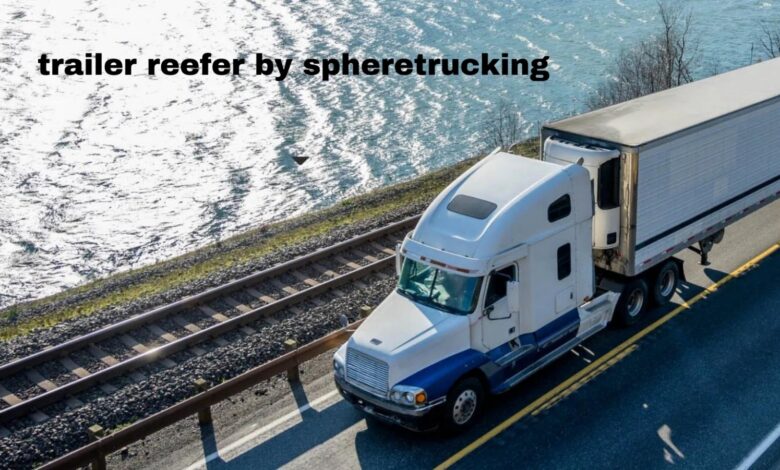
Trailer reefer is an advanced box trailer that is known for its refrigerated capabilities. A mechanical refrigerator is attached to its internal to regulate the temperature that serves the purpose of transportation of perishable goods such as dairy products, meat, fruits, vegetables, and some medicines as well. These box trailers or semi-refrigerated trailers are constructed with lightweight material thus increasing its payload capacity.
Its refrigerated facilities have made the transporting process of these materials easy in such a way that its internal temperature remains as it is despite harsh outside environmental conditions. It has different internal partitions that provide temperature control in all areas to transport different types of cargo. Its multifunctioning is fulfilling the desires of lots of companies thus building their trust.
Let’s begin our adventure towards these beneficial trailers and find out more about them.
What Does Reefer mean?
Reefer is referred to as a “Refrigerator” which is a standard refrigerated trailer that transports perishable goods over large miles without any damage or decay. They are made of stainless steel or aluminium and they have insulated walls to regulate the temperature.How does Reefer Trailer work?
The main duty of a reefer trailer is to keep the cargo cool at a specific temperature. They are made of three major components such as:- An evaporator coil
- A compressor
- A small diesel engine
Size and Features
Let’s talk about their sizes and features that will assist you in choosing the right refrigerated trailer for you. They have come in different sizes like 53 feet, 45, and 48 feet. Their lift gates make the loading and unloading a little bit easier. Moreover, their temperature control system helps the drivers to keep an eye on the internal temperature. If the temperature rises to the normal value it sends the warning signal to the driver. The driver can protect their cargo from damage by taking instant precautionary measures. It is helpful in case you have to transport the refrigerated items over the large areas. Electric unit technology in such refrigerators helps to maintain the internal temperature without running the engines of the trucks thus they are not heavy on budget because of less fuel usage. It has been observed Thermo King is the best-refrigerated unit manufacturer that has solar panels of 12 volts and 30 volts, they remain charged and can be used when needed.Reefer Trailer vs Dry Van
Reefer or dry van trailers are different from one another in terms of their construction, and features and perform relatively different functions. Refer trailers have insulated walls while dry van trailers have ventilated options and thus have flat wood and metal flooring to regulate the air. Reefer trailers transport the refrigerated material while dry vans transport the dry goods. Thus, they are different from one another in all aspects.Types of Cargo in Trailer Reefer
Any good that is temperature-sensitive and needs to be transported over the standard temperature systems is carried through a semi-refrigerated trailer reefer. I’m going to discuss their types:- Flowers
- Paint
- Artwork
- Fruits & Vegetables
- Pharmaceuticals
- Chewing gums
- Dairy products
- Candles
- Hazardous materials
Reefer Trailer Pros and Cons
Reefer trailers have a lot of advantages and disadvantages that I’m going to discuss below:Pros:
- Transport perishable goods like fruits and vegetable
- Provide temperature control environment
- Have insulated walls
- TRU temperature control system
Cons:
- Loading and unloading is a little bit difficult.
- It can be expensive.


