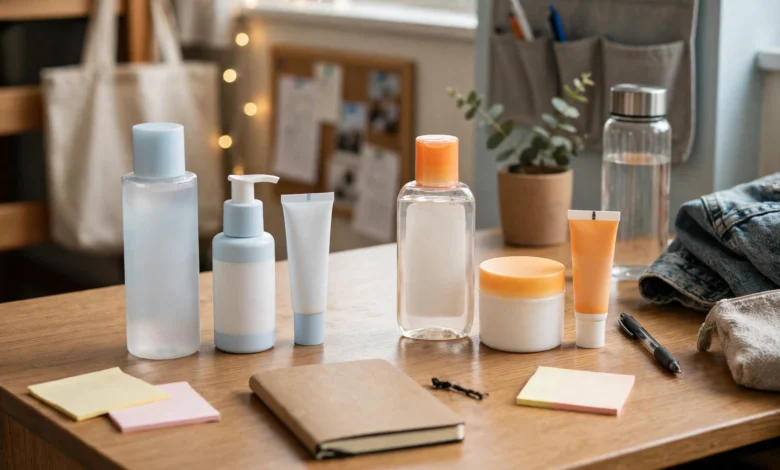
If you are a college student, you have probably asked some version of this question while standing in a drugstore aisle: are La Roche-Posay products actually better for acne-prone skin than Neutrogena, or are you just paying extra for a French name? Between dining hall food, late-night study sessions, shared dorm bathrooms, and stress breakouts before exams, student skin goes through a lot. Your budget, however, does not stretch very far.
This guide answers that question honestly. The La Roche-Posay vs Neutrogena debate is not really about which brand is “better” in the abstract. Both sell legitimate over-the-counter acne ingredients that dermatologists have recommended for decades. The real differences are which active ingredients each brand offers, how the formulas treat sensitive skin, and how much a full routine costs per semester. If you enjoy comparisons like this, you will find more buying guides on the Sumosearch homepage.
Every product fact and price below was checked against US retailer listings in October 2026, and prices are approximate, varying by store, size, and sales. There are no miracle claims here, because no cleanser fixes acne overnight.
The Short Answer for a College Budget
If money is your main concern, Neutrogena wins the La Roche-Posay vs Neutrogena comparison on price, and it is not particularly close. A complete three-step Neutrogena routine costs roughly half of what the equivalent La Roche-Posay routine costs, and you can find every product at almost any drugstore, grocery store, or campus shop. For mild to moderate breakouts on a tight budget, that value is hard to argue with.
La Roche-Posay pulls ahead in two specific areas. First, it sells an adapalene 0.1% gel, a prescription-strength retinoid available without a prescription and one of the most useful over-the-counter tools for preventing clogged pores. Neutrogena offers no adapalene product under its own brand. Second, the Effaclar line is built with sensitive, reactive skin in mind, so students whose skin stings or flakes easily often find its formulas easier to live with. Neither brand wins for everyone; the sections below show where each one earns its price.
What Each Brand Actually Sells for Acne
La Roche-Posay organizes its acne products under the Effaclar name. The core lineup includes the Effaclar Medicated Gel Cleanser with 2% salicylic acid plus lipo-hydroxy acid (LHA), a gentler exfoliating derivative. The Effaclar Duo spot treatment sold in the United States combines 5.5% micronized benzoyl peroxide with 0.4% LHA. The line’s heavy hitter is the Effaclar Adapalene Gel 0.1%, a once-daily retinoid treatment in a 1.6 oz tube. Most formulas are fragrance-free and non-comedogenic, matching the brand’s sensitive-skin reputation.
Neutrogena spreads its acne products across two main families. The Oil-Free Acne Wash is the classic orange cleanser many students grew up with; it uses 2% salicylic acid with the brand’s MicroClear technology in a big 9.1 fl oz pump bottle. The newer Stubborn Acne line is more targeted: the Stubborn Acne AM Treatment uses 2.5% micronized benzoyl peroxide for daytime use, while the Stubborn Marks PM Treatment uses Retinol SA, a stabilized form of retinol aimed at the look of post-acne marks and uneven tone rather than at active breakouts.
- La Roche-Posay hero products: Effaclar Medicated Gel Cleanser (2% salicylic acid), Effaclar Duo (5.5% benzoyl peroxide), Effaclar Adapalene Gel 0.1%
- Neutrogena hero products: Oil-Free Acne Wash (2% salicylic acid), Stubborn Acne AM Treatment (2.5% benzoyl peroxide), Stubborn Marks PM Treatment (Retinol SA)
- Shared ground: both are sold in US drugstores, use proven over-the-counter actives, and offer fragrance-free options
- Key difference: only La Roche-Posay gives you an adapalene option; only Neutrogena keeps every step under roughly $25
The Ingredients That Matter Most
Salicylic acid is the pore-clearing ingredient in both brands’ cleansers. It is oil-soluble, so it can get into oily pores and loosen the mix of oil and dead skin that forms blackheads and whiteheads. Both the Effaclar Medicated Gel Cleanser and the Neutrogena Oil-Free Acne Wash use it at 2%, the standard over-the-counter strength. Keep one limitation in mind: a cleanser touches your face for about a minute before you rinse it off, so a salicylic acid wash supports a routine rather than carrying it. In any La Roche-Posay vs Neutrogena routine, the leave-on treatment does most of the heavy lifting.
Benzoyl peroxide is the ingredient for red, inflamed pimples, because it targets acne-causing bacteria on the skin. Here the brands take different approaches. La Roche-Posay’s Effaclar Duo uses a stronger 5.5% concentration paired with LHA, and it is positioned as a spot treatment for individual blemishes. Neutrogena’s Stubborn Acne AM Treatment uses a milder 2.5% micronized formula designed to be spread over breakout-prone areas each morning. Higher percentage does not automatically mean better results; it often just means more dryness. One warning from the drug-facts label: benzoyl peroxide can bleach towels and dyed fabrics, so let it dry fully before bed.
The retinoid slot is where the two brands genuinely diverge. Adapalene 0.1% is a vitamin A derivative that regulates skin cell turnover, which helps keep pores from clogging in the first place. It was once prescription-only and is now FDA-approved for over-the-counter acne use, and the Effaclar version asks for just a pea-sized amount once a day. Neutrogena’s Retinol SA is also a vitamin A derivative, but it is a cosmetic retinol positioned mainly at fading the look of marks left after breakouts heal. If preventing new breakouts is the goal, adapalene is the more direct tool. If your breakouts are mostly gone and dark marks are the problem, Neutrogena’s gentler nighttime option makes sense.
What a Full Routine Really Costs
Sticker prices on single products do not tell the whole story, so let’s price the La Roche-Posay vs Neutrogena decision the way a student actually buys it: one cleanser, one daytime treatment, and one nighttime treatment. The table below uses approximate US prices checked in October 2026 at major retailers like Target, Ulta, and H-E-B. Expect your total to move depending on the store, the size you pick, and current sales.
| Routine Step | La Roche-Posay Pick | Approx. Price | Neutrogena Pick | Approx. Price |
|---|---|---|---|---|
| Cleanser | Effaclar Medicated Gel Cleanser (2% salicylic acid) | $12–$19 | Oil-Free Acne Wash, 9.1 fl oz (2% salicylic acid) | ~$12 |
| Daytime treatment | Effaclar Duo (5.5% benzoyl peroxide) | ~$36 | Stubborn Acne AM Treatment (2.5% benzoyl peroxide) | ~$13 |
| Nighttime treatment | Effaclar Adapalene Gel 0.1%, 1.6 oz | ~$40 | Stubborn Marks PM Treatment (Retinol SA), 1 oz | ~$25 |
| Three-step total | ~$88–$95 | ~$50 |
Two honest footnotes belong under that table. First, both routines still need a basic moisturizer and a morning sunscreen, because acne actives dry skin out and the adapalene label itself directs you to use SPF daily. La Roche-Posay’s Toleriane Double Repair Moisturizer runs about $11 to $25 depending on size. Second, these products last: a pea-sized amount of adapalene stretches a 1.6 oz tube across many weeks, and a 9.1 oz cleanser bottle is genuinely large. Your per-month cost is lower than the checkout total suggests, but the upfront gap is real.
There is also a smart middle path. Buy the Neutrogena cleanser and daytime treatment for everyday value, then spend your one splurge on the La Roche-Posay adapalene gel, the single product Neutrogena cannot match. Mixing brands is completely fine: your skin responds to ingredients and consistency, not to matching logos on your shelf.
A Simple Starter Routine That Fits Dorm Life
The best La Roche-Posay vs Neutrogena routine is the one you will actually do at 8 a.m. before class and at midnight after studying. Keep it to three steps, twice a day; the table below slots each brand into the same structure so you can mix and match.
| Time | Step | La Roche-Posay Option | Neutrogena Option |
|---|---|---|---|
| Morning | 1. Cleanse | Effaclar Medicated Gel Cleanser | Oil-Free Acne Wash |
| Morning | 2. Treat | Effaclar Duo on active spots | Stubborn Acne AM Treatment on breakout zones |
| Morning | 3. Protect | Moisturizer, then SPF 30 sunscreen | Moisturizer, then SPF 30 sunscreen |
| Night | 1. Cleanse | Effaclar Medicated Gel Cleanser | Oil-Free Acne Wash |
| Night | 2. Treat | Effaclar Adapalene Gel 0.1% (pea-sized, whole face) | Stubborn Marks PM Treatment |
| Night | 3. Moisturize | Toleriane Double Repair Moisturizer | Any gentle fragrance-free moisturizer |
Starting everything on the same day is the most common student mistake, because if your skin reacts, you cannot tell which product caused it. Follow this slower rollout instead:
- Days 1–3: patch test each new product on a small area, such as inside your elbow or along your jawline, and watch for burning or a rash.
- Week 1: use only the cleanser and a plain moisturizer so your skin adjusts to the new wash.
- Week 2: add the daytime benzoyl peroxide treatment every other morning, then daily if your skin stays calm.
- Week 3: add the nighttime retinoid two or three nights per week, using a pea-sized amount for your whole face.
- Weeks 4–8: build the retinoid toward nightly use as tolerated, and keep everything else exactly the same.
When La Roche-Posay Wins
Choose La Roche-Posay if clogged pores are your main problem. If your breakouts are mostly blackheads, whiteheads, and small bumps that never quite come to a head, adapalene is the standout over-the-counter ingredient for that pattern, and Effaclar is the only place to get it in this comparison. Students with stubborn, recurring breakouts who have already tried basic drugstore washes are the ones most likely to feel the extra money was well spent.
La Roche-Posay also wins when your skin is acne-prone and sensitive at the same time. The Effaclar formulas are generally built to minimize fragrance and common irritants, and the brand’s moisturizers are designed to support the skin barrier while you use drying actives. If salicylic acid washes have left you tight, red, and flaky in the past, the gentler overall design of this line is a reasonable reason to pay more.
- You want adapalene 0.1%, the strongest acne-prevention option in this comparison
- Your skin reacts easily to fragrance or harsh-feeling cleansers
- Your breakouts are frequent and stubborn rather than occasional
- You can afford to replace one treatment product at a time instead of a whole set
When Neutrogena Wins
Choose Neutrogena if your budget is firm and your breakouts are mild to moderate. The Oil-Free Acne Wash gives you the same 2% salicylic acid as the Effaclar cleanser in a much bigger bottle for less money, and the Stubborn Acne AM Treatment’s gentler 2.5% benzoyl peroxide is a sensible first treatment if you have never used the ingredient. For a student spending under $50 total, this is a complete, legitimate routine, not a compromise bin of leftovers.
Neutrogena also wins on pure convenience. You can replace an empty bottle at almost any grocery store or big-box store in every US college town. And if breakouts have calmed down but flat marks remain, the Stubborn Marks PM Treatment is aimed squarely at that problem, while adapalene is aimed at preventing the next round instead.
- Your total budget is around $50 or less for a full routine
- Your acne is mild, occasional, or mostly tied to stress and exams
- You are a first-time benzoyl peroxide user and want the gentler strength
- Post-acne marks bother you more than active pimples right now
- You need a replacement bottle today, not after shipping
Patch Testing and Consistency Matter More Than the Brand
Here is the part nobody wants to hear during midterms: the brand matters less than how you use the products. The American Academy of Dermatology says to give an acne treatment at least 6 to 8 weeks before expecting fewer breakouts, and topical retinoids commonly need 8 to 12 weeks to show their full effect. Early dryness or flaking from a retinoid usually settles within the first month. Judging a routine after ten days, then abandoning it, is the fastest way to waste money on both brands.
Patch testing protects you from the opposite mistake. A new active can occasionally irritate or trigger a reaction, and the benzoyl peroxide drug-facts label itself warns that using another topical acne medication at the same time makes irritation more likely. Testing one product at a time, on a small patch of skin, for a few days before full use takes almost no effort and can save you from a full-face flare-up. If acne is painful, cystic, leaving scars, or unchanged after about three months of steady use, that is the point to see a dermatologist rather than buying a third cleanser; many universities include basic visits in student health fees.
- ☐ Patch test every new product before full-face use
- ☐ Start one new active at a time, never three in the same week
- ☐ Use a pea-sized amount of retinoid, not a thick layer
- ☐ Moisturize every day, even when your skin feels oily
- ☐ Wear SPF 30 sunscreen every morning, especially while using a retinoid
- ☐ Keep benzoyl peroxide away from colored towels and pillowcases
- ☐ Take a weekly photo in the same light to judge progress
- ☐ Give the routine 8 full weeks before deciding it does not work
FAQs
Is La Roche-Posay worth the extra money for a college student?
It depends on what you are buying. In the La Roche-Posay vs Neutrogena matchup, the cleansers are close enough that most students should save money there. The product that can justify its higher price is the Effaclar Adapalene Gel 0.1%, because Neutrogena sells no equivalent. If your breakouts are mild and occasional, Neutrogena’s lower prices are the smarter spend. If clogged pores keep coming back, the adapalene splurge has a clear purpose.
Can I mix La Roche-Posay and Neutrogena products in one routine?
Yes. Skin responds to ingredients, not brand loyalty, so a Neutrogena cleanser with a La Roche-Posay adapalene gel is a perfectly sensible student routine. Just introduce products one at a time, and avoid layering several strong actives in the same routine at first, since combining topical acne medications too quickly raises the chance of dryness and irritation.
How long before I see results from either brand?
The American Academy of Dermatology advises giving an acne treatment at least 6 to 8 weeks to start reducing breakouts, and retinoids like adapalene may need 8 to 12 weeks for significant improvement. Mild dryness in the first few weeks is common and usually settles. If nothing has changed after about three months of consistent use, see a dermatologist instead of cycling through more products.
Conclusion
So, for a college student with acne-prone skin, is La Roche-Posay better than Neutrogena? The honest La Roche-Posay vs Neutrogena verdict is that Neutrogena wins on value and convenience, while La Roche-Posay wins on one key ingredient, adapalene, and on formulas designed for reactive skin.
A Neutrogena routine at roughly $50 covers the basics well. A La Roche-Posay routine at roughly $90 to $95 adds a stronger prevention tool for stubborn, clogged-pore breakouts. Pick the routine that matches your skin and your wallet, patch test, and give it a full eight weeks. Consistency with a decent routine beats an expensive routine you abandon by week two.