In the hyper-competitive luxury and cosmetic markets of 2026, the “unboxing experience” has become as vital as the product itself. For decades, high-end brands relied on mass-produced injection molding to create their packaging. While efficient, this model forced a “one-size-fits-all” aesthetic. If a brand wanted to launch a limited-edition run of 500 personalized lipstick cases or bespoke fragrance bottles for a VIP event, the tooling costs for traditional manufacturing made it economically impossible.
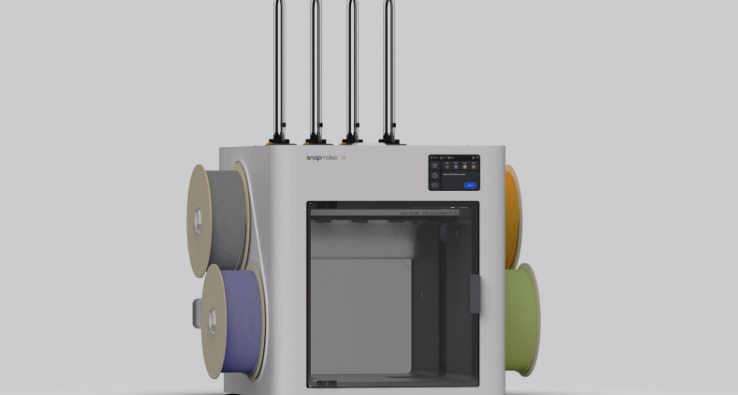
Today, the color 3d printer has shattered that barrier. By moving from static molds to dynamic digital files, cosmetic giants and indie “clean beauty” labels alike are embracing Customization at Scale.
The Shift from Utility to “Artisanal Industrialism”
Packaging in 2026 is no longer just a vessel; it is a brand statement. The modern consumer—particularly Gen Alpha and late Millennials—prizes “hyper-personalization.” They don’t just want a luxury face cream; they want a jar that features their initials, a unique geometric pattern, or a color gradient that matches their personal style.
By integrating a professional 3d printer into their R&D and specialized production lines, brands can now produce “Artisanal Industrial” packaging. This process uses high-resolution additive manufacturing to create complex, organic shapes—such as lattice structures or intricate floral filigrees—that are physically impossible to release from a traditional two-part metal mold.
Multi-Material Sophistency: The “Luxury Feel”
One of the biggest hurdles for 3D-printed packaging was the tactile “feel” of the material. A luxury consumer expects weight, smoothness, and a specific “click” when a lid closes. In 2026, the color 3d printer has evolved to meet these sensory demands.
Modern systems allow for the simultaneous printing of multiple materials with varying densities. A brand can print a heavy, stone-like composite base for a perfume bottle, a translucent “glass-look” body, and a soft-touch elastomeric seal—all in a single build. This multi-material capability ensures that the 3D-printed version doesn’t just look like the original; it feels like a premium, multi-component assembly.
The Power of “Micro-Drop” Color Precision
Color is the language of cosmetics. In 2026, the ability to achieve exact pantone matching is a requirement, not a feature. Advanced 3d printer hardware now utilizes “Micro-Drop” technology or sophisticated tool-changing systems that allow for vivid, high-saturation colors and smooth gradients.
For a cosmetic brand, this means the ability to offer:
- Seasonal Gradients: Packaging that transitions from “Spring Peach” to “Summer Coral” without needing a new production line.
- Co-Branded Limited Editions: Rapidly producing packaging for influencer collaborations where the colors match the creator’s specific brand palette.
- Serialized Designs: Every single unit in a 1,000-piece run can have a unique color pattern, making every purchase a one-of-a-kind collector’s item.
Sustainability: The “Zero-Inventory” Model
Beyond aesthetics, the move toward the color 3d printer is a major sustainability win. Traditional packaging manufacturing often requires “Minimum Order Quantities” (MOQs) of 10,000 units or more. If a product line fails or the branding changes, thousands of plastic containers end up in landfills.
In 2026, the “Zero-Inventory” model is the new standard. Brands keep a digital library of their packaging designs and only print what is ordered. This “On-Demand” approach eliminates warehouse overhead and drastically reduces the carbon footprint associated with overproduction. Furthermore, many luxury brands are now using biodegradable filaments or “refillable” 3D-printed cases that are designed to be kept for a lifetime, with only the internal product cartridge being replaced.
The “In-Store” Manufacturing Experience
Perhaps the most radical application of 2026 technology is the “In-Store Micro-Factory.” High-end boutiques in cities like Paris, Tokyo, and New York are now installing compact, high-speed color 3d printer units directly on the sales floor.
A customer can select their shade of foundation, scan their hand for an ergonomic grip profile, and watch as their personalized, color-matched bottle is printed in real-time. This turns a simple purchase into an “event,” creating a deep emotional connection between the consumer and the brand.
Conclusion: Packaging as a Service
The era of the “disposable” plastic bottle is coming to an end. As we look at the remainder of 2026, the 3d printer has transformed packaging from a commodity into a service. It is now a tool for expression, a shield for the environment, and a bridge between digital design and physical luxury.
For cosmetic and luxury brands, the message is clear: the brands that win in 2026 will be those that use technology to treat every customer like a “market of one.” Through the power of customization at scale, the box is finally as beautiful as what’s inside.