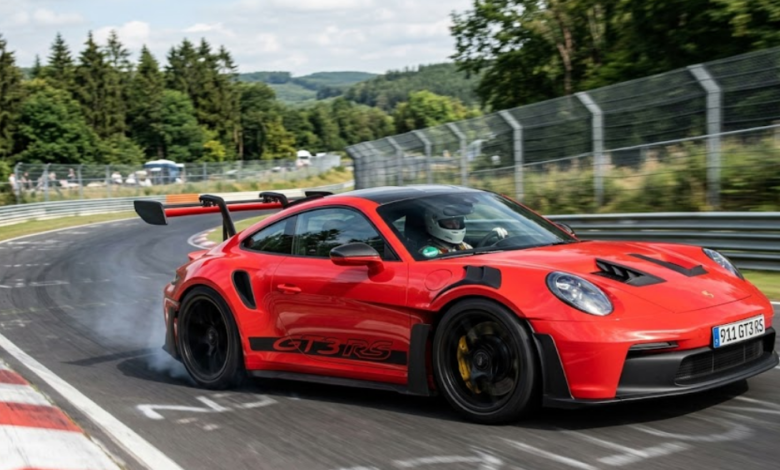
The Porsche 911 GT3 RS represents the purest expression of motorsport engineering adapted for the road. Built for drivers who demand extreme precision, aerodynamic dominance, and uncompromising performance, the GT3 RS is not just a car—it is a statement of intent. It blends racing technology with road legality, offering one of the most visceral driving experiences in the automotive world.
This article explores the design, performance, engineering, driving experience, and legacy of the Porsche 911 GT3 RS in detail, along with frequently asked questions at the end.
Introduction to the Porsche 911 GT3 RS
The Porsche 911 GT3 RS sits at the very top of the naturally aspirated 911 lineup. Developed by Porsche, it is heavily inspired by motorsport engineering, particularly GT racing.
Unlike standard sports cars designed for a balance between comfort and performance, the GT3 RS is engineered with a clear priority: lap time dominance. Every component—from the engine tuning to the aerodynamic design—serves the purpose of improving track performance.
It is not built for casual cruising. Instead, it is designed for drivers who understand racing lines, braking points, and the art of pushing a car to its absolute limit.
Exterior Design and Aerodynamics
The first thing that stands out about the Porsche 911 GT3 RS is its aggressive aerodynamic bodywork. Every curve, vent, and wing is engineered with function in mind.
Advanced Aerodynamic Features
The car features a massive rear wing that is adjustable and generates significant downforce. Unlike traditional road cars, the GT3 RS uses aerodynamic efficiency as a core performance tool rather than a styling enhancement.
Key aerodynamic elements include:
- Large swan-neck rear wing
- Front splitter for increased front-end grip
- Air vents on the hood and fenders for cooling and airflow
- Lightweight carbon fiber components
At high speeds, these elements work together to press the car onto the road, improving stability during cornering and braking.
Lightweight Construction
Weight reduction is a major focus. Porsche uses materials like carbon fiber reinforced plastic (CFRP) and magnesium to keep the car as light as possible. Even the glass is optimized for weight savings.
The result is a car that feels sharp, responsive, and extremely connected to the road surface.
Engine and Performance
At the heart of the GT3 RS lies a naturally aspirated 4.0-liter flat-six engine. This engine is a masterpiece of mechanical engineering and is one of the last of its kind in an era dominated by turbocharging.
Power Output and Acceleration
The engine produces around 518 horsepower, delivered to the rear wheels through a lightning-fast dual-clutch transmission (PDK). This setup allows the car to accelerate from 0 to 100 km/h in just over 3 seconds.
Unlike turbocharged engines, the naturally aspirated powertrain provides linear power delivery and instant throttle response, making it ideal for track driving.
High-Revving Character
One of the most exciting aspects of the GT3 RS is its ability to rev extremely high, often exceeding 9,000 RPM. This creates an exhilarating driving experience where power builds progressively and aggressively.
The sound alone is a major part of its appeal—sharp, mechanical, and unmistakably Porsche.
Interior and Driver Focus
Inside the Porsche 911 GT3 RS, everything is designed with the driver in mind. Comfort is secondary to performance, but Porsche still maintains a level of refinement expected from a premium sports car.
Racing-Inspired Cabin
The interior features:
- Lightweight bucket seats
- Alcantara and carbon fiber finishes
- Minimalist dashboard layout
- Racing-style steering wheel with drive mode controls
The seating position is low, enhancing the feeling of being connected to the road.
Technology and Controls
Despite its track-focused nature, the GT3 RS includes modern technology such as:
- Digital instrument cluster
- Track telemetry systems
- Adjustable driving modes
- Performance data recording
These tools help drivers analyze lap times and improve their performance on the track.
Driving Experience
Driving the GT3 RS is an intense experience that demands skill and attention. It is not a car that forgives careless inputs, but it rewards precision with extraordinary performance.
On the Track
On a racetrack, the GT3 RS feels almost alive. The steering is incredibly direct, providing instant feedback. The aerodynamic downforce allows it to corner at extremely high speeds without losing stability.
Braking performance is equally impressive, thanks to high-performance carbon ceramic brakes that offer consistent stopping power even under extreme heat.
On the Road
While it is road-legal, the GT3 RS is less comfortable on regular streets. The suspension is stiff, and road noise is significant. However, for enthusiasts, even a short drive feels special.
Every acceleration, gear shift, and corner becomes an event.
Engineering Excellence
The GT3 RS is not just about power—it is about balance and precision engineering.
Suspension System
The car uses a highly advanced suspension setup with adjustable dampers. This allows drivers to fine-tune handling characteristics depending on track conditions.
Rear-Wheel Steering
One of the standout technologies is rear-wheel steering, which improves agility at low speeds and stability at high speeds. This system enhances cornering performance significantly.
Cooling and Efficiency
Because the engine operates at high RPMs, cooling is critical. The GT3 RS uses advanced air channels and radiators to maintain optimal temperatures during intense driving sessions.
Motorsport Heritage
The GT3 RS has deep roots in Porsche’s racing history. It is closely linked to Porsche’s GT racing program, where engineering solutions are tested in real competition before being adapted to road cars.
This connection ensures that every generation of the GT3 RS benefits from real-world racing experience.
It is often considered a bridge between professional motorsport and enthusiast driving, offering a near-race car experience without requiring a racing license.
Why the GT3 RS Stands Out
There are many high-performance sports cars in the world, but the GT3 RS stands apart for several reasons:
- Naturally aspirated high-revving engine
- Extreme aerodynamic focus
- Track-ready suspension and braking systems
- Lightweight engineering philosophy
- Direct connection to motorsport heritage
While many modern supercars prioritize straight-line speed, the GT3 RS prioritizes cornering ability, balance, and driver engagement.
Ownership Experience
Owning a GT3 RS is not just about transportation—it is about lifestyle.
Owners often use the car primarily on weekends or track days. Maintenance costs are high, but so is the level of engineering precision and exclusivity.
It also holds strong resale value due to its reputation and limited availability.
Future of the GT3 RS
As the automotive industry moves toward hybrid and electric powertrains, the future of naturally aspirated engines like the one in the GT3 RS is uncertain.
This makes the current generation even more special, as it may represent one of the final evolutions of traditional high-revving performance engines.
Porsche continues to refine its engineering, but the GT3 RS remains a symbol of pure mechanical driving passion.
Conclusion
The Porsche 911 GT3 RS is more than just a high-performance car—it is a carefully engineered machine built for driving enthusiasts who value precision, speed, and connection to the road. From its aerodynamic design to its naturally aspirated engine, every aspect is designed to deliver an unmatched track experience.
In a world of increasingly complex and electronic vehicles, the GT3 RS stands as a reminder of what pure driving feels like.
Frequently Asked Questions (FAQs)
1. What is the Porsche 911 GT3 RS designed for?
It is designed primarily for track performance while still being road legal. It focuses on lap times, aerodynamics, and driving precision.
2. How fast is the GT3 RS?
It can accelerate from 0 to 100 km/h in just over 3 seconds, with a top speed exceeding 300 km/h depending on configuration.
3. Is the GT3 RS comfortable for daily driving?
Not really. It is stiff, loud, and track-focused, making it less suitable for daily commuting.
4. What makes the GT3 RS different from the standard GT3?
The RS version has more aggressive aerodynamics, reduced weight, improved suspension tuning, and greater track-focused engineering.
5. Does the GT3 RS have turbocharging?
No, it uses a naturally aspirated flat-six engine, which is one of its most distinctive features.
6. Why is the GT3 RS so popular among enthusiasts?
Because it delivers raw driving engagement, precise handling, and a direct connection to motorsport engineering.